- Home
- All Products
- OnePlus
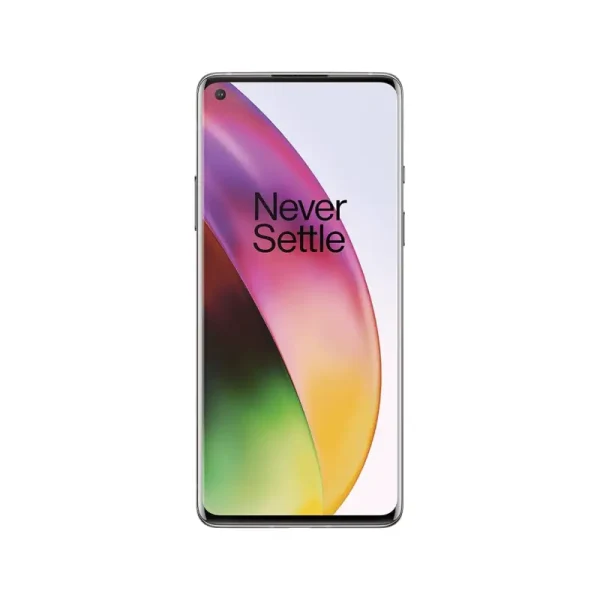
- OnePlus 8 5G (T-Mobile)
OnePlus 8 5G (T-Mobile)
-
Battery: Li-Po 4300 mAh
-
RAM: 8GB
-
Storage: 128GB
-
Display: Fluid AMOLED, 6.55 inches
-
Camera: Rear 48 MP+16 MP+2 MP, and Front 16 MP
-
OS: Android 10, OxygenOS 10.0
Full Specifications
General
| Model | OnePlus 8 5G (T-Mobile) |
| Announced | 2020, April 14 |
| Released | 2020, April 29 |
| Status | Available |
Price
| Official | Not Available |
| Unofficial | About 42999 BDT 8GB/28GB Exp. |
Design
| Dimensions The Dimensions section shows the phone’s physical size in Height × Length × Width (H × L × W) format, along with its volume, when available. For flip phones, the dimensions are measured with the flip closed. This information helps users understand the phone’s overall size, thickness, portability, and how comfortably it may fit in the hand or pocket. | 160.2 x 72.9 x 8 mm (6.31 x 2.87 x 0.31 in) |
| Weight The Weight section shows the total weight of the phone, usually measured in grams (g). It helps users understand how light or heavy the device feels during everyday use and carrying. For phones with different designs or configurations, the listed weight may vary depending on the materials, battery, and other hardware components. | 180 g (6.35 oz) |
| SIM The SIM section provides details about the phone’s supported SIM configuration, including SIM type, number of SIM slots, and eSIM support, where available. It may specify options such as Nano-SIM, Single SIM, Dual SIM, or Hybrid Dual SIM. This information helps users understand how the phone handles multiple mobile numbers and which SIM format is required. For Dual SIM devices, the section may also indicate whether both SIMs can remain active simultaneously and support mobile network connectivity. |
Nano-SIM IP68 dust/water resistant (not for use underwater, liquid damage is not covered under warranty) |
| Colors |
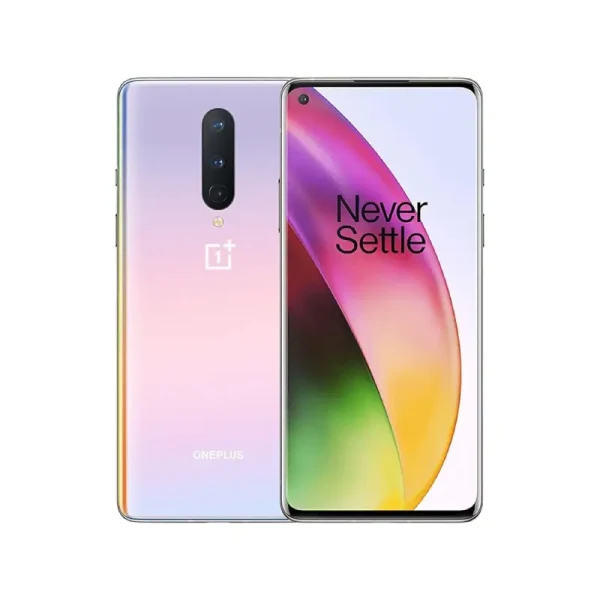
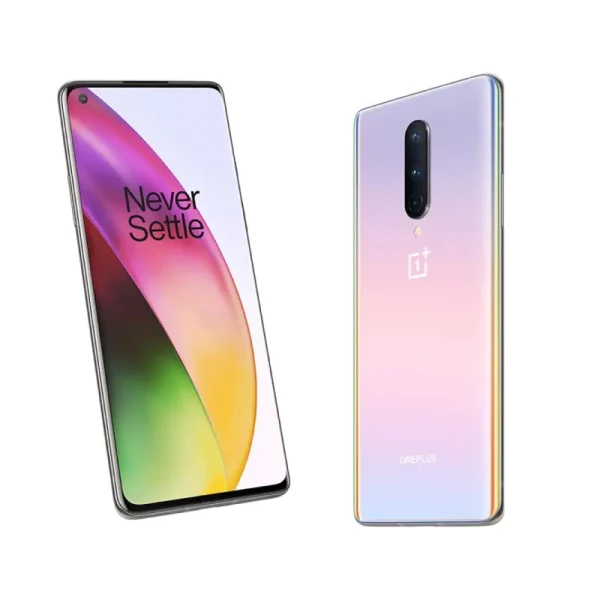
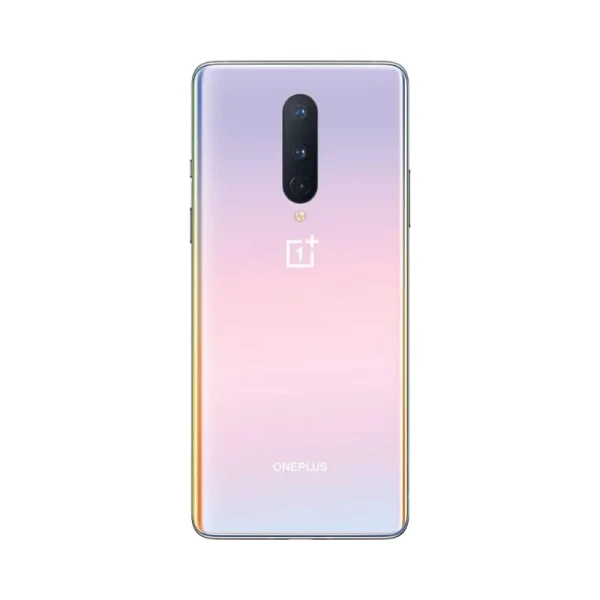
Onyx Black, Interstellar Glow |
Display Specification
| Display Type The Display Type section identifies the technology used for the phone’s screen, such as IPS LCD, AMOLED, OLED, or LTPO AMOLED. It helps users understand the display’s overall visual quality, including color reproduction, contrast, brightness, viewing experience, and power efficiency. The display type is an important specification when comparing smartphone screens. | Fluid AMOLED |
| Size The Display Size section shows the diagonal size of the phone’s screen, usually measured in inches. It helps users understand the available viewing area and overall screen experience. A larger display is generally better for watching videos, gaming, and browsing, while a smaller display can offer easier handling and portability. | 6.55 inches, 103.6 cm2 |
| Resolution | 1080 x 2400 pixels, 20:9 ratio |
| Refresh Rate | 90Hz |
| Pixel Density Pixel Density (PPI) is refers to the concentration of pixels on a particular display, measured in pixels per inch (ppi). Pixel density is calculated by dividing the diagonal pixel resolution of a display by its diagonal size, higher pixel density better display quality. | 402 ppi density |
| Features |
HDR10+ 88.7% screen-to-body ratio |
Storage
| Card Slot The Storage Card Slot section indicates whether the phone supports an external memory card, such as a microSD card, for expanding storage. It shows users whether they can add extra space for apps, photos, videos, and other files beyond the phone’s built-in storage. If the phone does not support a memory card, it will be listed as Not Supported. | No |
| Internal Storage The Internal Storage section shows the built-in storage capacity available on the phone, usually measured in GB. It determines how much space is available for apps, photos, videos, documents, and other files. Phones may come with different storage options, such as 128GB, 256GB, or 512GB, depending on the model and variant. |
128GB 8GB RAM UFS 3.0, 2-LANE |
Main Camera
| Camera Setup | Triple |
| Resolution |
48 MP, f/1.8, 25mm (wide), 1/2.0", 0.8µm, PDAF, OIS 16 MP, f/2.2, 14mm, 116˚ (ultrawide) 2 MP, f/2.4, (macro) |
| Features |
Dual-LED flash, HDR, panorama |
| Video | 4K@30/60fps, 1080p@30/60/240fps, Auto HDR, gyro-EIS |
Selfie Camera
| Camera Setup | Single |
| Resolution |
16 MP, f/2.0, (wide), 1/3.06", 1.0µm |
| Video | 1080p@30fps, gyro-EIS |
| Features |
Auto-HDR |
Platform
| Operating System The Operating System (OS) section shows the software platform that powers the phone and manages its hardware, apps, and system features. It typically includes the OS name and version, such as Android or iOS, and may also mention the manufacturer’s custom user interface. This information helps users understand the phone’s software experience, features, compatibility, and available updates. | Android 10, OxygenOS 10.0 |
| Chipset Chipset is a group of integrated circuits designed to perform one or a more dedicated functions, often with real time computing constraints, Popular smartphones are equipped with more advanced embedded chipsets that can do many different tasks depending on their programming. | Qualcomm SM8250 Snapdragon 865 5G (7 nm+) |
| CPU CPU (Central Processing Unit) mostly known as processors, CPU processes instructions in order to carry out certain functions that make your device operate properly. Processors are often described as the brain of computers, smartphones and tablets, Smartphones and tablets rely on processors to carry out their every task, Processors are an incredibly important factor in selecting any type of computing device, including your smartphone. | Octa-core (1x2.84 GHz Cortex-A77 & 3x2.42 GHz Cortex-A77 & 4x1.80 GHz Cortex-A55) |
| GPU GPU (Graphics Processing Unit) is a single-chip processor designed to rapidly manipulate and alter memory to accelerate the creation of images in a frame buffer intended for output to a display, This includes things such as lighting effects, object transformations, and 3D motion. | Adreno 650 |
Battery
| Battery Type The Battery Type section identifies the technology and design of the phone’s built-in battery, such as Li-Ion (Lithium-Ion) or Li-Po (Lithium-Polymer). It helps users understand the type of battery used to power the device and provides a basic overview of its battery technology. | Li-Poly (Lithium Polymer) |
| Capacity The Battery Capacity section shows the amount of electrical charge the phone’s battery can store, usually measured in mAh (milliampere-hours). A higher capacity generally provides more energy for everyday use, although actual battery life also depends on the display, processor, software, network usage, and other hardware components. | 4300 mAh |
| Removable | No |
| Charging |
30W wired, 50% in 22 min (advertised) |
| Wireless Charging Wireless Charging (Inductive Charging) uses an electromagnetic field to transfer energy between two objects. This is usually done with a charging station. Energy is sent through an inductive coupling to an electrical device, which can then use that energy to charge batteries or run the device. | No |
Multimedia
| Loudspeaker The Loudspeaker section indicates the type and configuration of the phone’s built-in speakers, such as single or stereo speakers. It helps users understand the device’s audio output for calls, music, videos, gaming, and other multimedia activities. Some phones may also include additional audio features for a better listening experience. | Yes, with stereo speakers |
| Audio Jack The Audio Jack section indicates whether the phone includes a dedicated 3.5mm headphone jack for connecting wired headphones, earphones, or external audio devices. If the phone does not have a traditional audio jack, users may need USB Type-C headphones or an adapter for wired audio. The specification helps users quickly check the phone’s compatibility with their preferred audio accessories. | No |
Sensors
| Fingerprint | Yes (under display, optical) |
| Other Sensors | accelerometer, gyro, proximity, compass |
Network & Connectivity
| Technology | GSM / CDMA / HSPA / EVDO / LTE / 5G |
| Speed | HSPA 42.2/5.76 Mbps, LTE-A (5CA) Cat18 1200/150 Mbps, 5G 7.5 Gbps DL |
| Wi-fi The Wi-Fi section shows the wireless networking technologies and standards supported by the phone for connecting to the internet and other compatible devices. It may include standards such as Wi-Fi 4, Wi-Fi 5, Wi-Fi 6, Wi-Fi 6E, or Wi-Fi 7, along with features like dual-band, tri-band, Wi-Fi Direct, and hotspot support, where available. This information helps users understand the phone’s wireless connectivity, network compatibility, speed capabilities, and connection features. | Wi-Fi 802.11 a/b/g/n/ac/6, dual-band, Wi-Fi Direct, DLNA |
| Bluetooth The Bluetooth section shows the wireless communication technology and version supported by the phone, such as Bluetooth 5.0, 5.1, 5.2, 5.3, or 5.4. It enables the phone to connect wirelessly with headphones, speakers, smartwatches, keyboards, cars, and other compatible devices. Where available, this section may also mention features such as A2DP, LE, aptX, or other Bluetooth audio and connectivity technologies. | 5.1, A2DP, LE, aptX HD |
| NFC The NFC (Near Field Communication) section indicates whether the phone supports short-range wireless communication between compatible devices. NFC can be used for contactless payments, quick device pairing, data sharing, access cards, and other NFC-enabled services, depending on the phone and region. This specification helps users check whether the device supports convenient tap-to-connect and contactless features. | Yes |
| Positioning |
GPS (L1+L5), GLONASS (G1), BDS (B1), GALILEO (E1+E5a) |
| FM Radio | No |
| USB | USB Type-C 3.1, OTG |
| 2G Network The 2G Network section shows whether the phone supports second-generation mobile networks, including GSM, GPRS, and EDGE technologies. It provides basic connectivity for voice calls, SMS, and limited mobile data services where 2G networks are available. |
GSM 850 / 900 / 1800 / 1900 CDMA 800 / 1700 / 1900 |
| 3G Network The 3G Network section indicates the phone’s compatibility with third-generation mobile networks, such as UMTS, HSPA, and HSPA+. 3G provides faster mobile data than 2G and supports services such as web browsing, video calling, and multimedia streaming. |
HSDPA 800 / 850 / 900 / 1700(AWS) / 1800 / 1900 / 2100 CDMA2000 1xEV-DO |
| 4G Network The 4G Network section shows whether the phone supports fourth-generation mobile networks, primarily LTE technology. 4G offers faster mobile internet speeds, lower latency, and improved performance for browsing, streaming, online gaming, and other data-intensive activities. |
1, 2, 3, 4, 5, 7, 8, 12, 13, 17, 18, 19, 20, 25, 26, 28, 29, 30, 34, 38, 39, 41, 46, 48, 66, 71 |
| 5G Network The 5G Network section indicates the phone’s compatibility with fifth-generation mobile networks. 5G can provide higher data speeds, lower latency, and improved network capacity, supporting faster downloads, high-quality streaming, cloud services, and other demanding mobile applications. |
2, 5, 41, 66, 71 SA/NSA |
PROS
- 90Hz AMOLED
- Snapdragon 865
- 5G Support
- 30W Fast Charging
- Stereo Speakers
- Good Performance
CONS
- No Wireless Charging
- No microSD
- No 3.5mm Jack
- T-Mobile Variant
About the OnePlus 8 5G (T-Mobile)
The OnePlus 8 5G (T-Mobile) is one of the first OnePlus smartphones to officially support 5G networks in the United States, offering blazing-fast speeds and a premium flagship experience at an affordable price point. It features a sleek design with a 6.55-inch Fluid AMOLED display that supports FHD+ resolution, HDR10+, and a smooth 90Hz refresh rate, delivering stunning visuals for movies, gaming, and daily use. Powered by the Qualcomm Snapdragon 865 processor and paired with the Snapdragon X55 5G modem, this device ensures ultra-fast connectivity and strong performance. It comes with 8GB RAM and 128GB UFS 3.0 storage, making it perfect for multitasking.
The triple rear camera system includes a 48MP main sensor, 16MP ultra-wide, and 2MP macro lens, while the 16MP front camera handles selfies with AI enhancements. A 4300mAh battery with Warp Charge 30T fast charging allows you to stay powered all day. Running on OxygenOS based on Android, the OnePlus 8 5G (T-Mobile) offers a clean, fast, and customizable user experience. With exclusive T-Mobile support, it ensures wide 5G coverage, making it a future-ready device for US customers.
Main Key Features
- 6.55-inch FHD+ Fluid AMOLED display, 90Hz refresh rate
- Qualcomm Snapdragon 865 + Snapdragon X55 5G modem
- 8GB RAM, 128GB UFS 3.0 storage
- Triple rear camera: 48MP + 16MP + 2MP
- 16MP front camera
- 4300mAh battery with Warp Charge 30T
- OxygenOS (Android-based)
- Exclusive T-Mobile 5G support
Why Choose This Phone?
Choose the OnePlus 8 5G (T-Mobile) if you want a future-ready 5G phone with flagship performance at a competitive price. It’s ideal for T-Mobile customers who want wide 5G coverage, a smooth display, and a fast-charging battery without paying the premium price of other 5G flagships.
Opinion
The OnePlus 8 5G (T-Mobile) stands out as one of the best value 5G smartphones in its category. With its Snapdragon 865 chipset, 5G connectivity, and 90Hz AMOLED display, it delivers a premium experience at a mid-range price. While it lacks wireless charging and expandable storage, the overall performance, design, and OxygenOS software make it a strong contender for anyone looking for a reliable 5G smartphone in the US market.
See Another Model:
FAQs about OnePlus 8 5G (T-Mobile)
Q: Does the OnePlus 8 5G support T-Mobile’s nationwide 5G network?
A: Yes, it was designed to work with T-Mobile’s 5G coverage across the US.
Q: Does it support wireless charging?
A: No, the OnePlus 8 5G only supports Warp Charge 30T fast charging.
Q: Is the storage expandable?
A: No, it does not support microSD expansion, but it comes with 128GB UFS 3.0 storage.
Q: How is the camera quality?
A: The triple camera setup works well in daylight and wide shots, but low-light performance is average.
Q: Is the OnePlus 8 5G (T-Mobile) still worth buying in 2025?
A: Yes, if you want an affordable 5G phone with smooth performance, fast charging, and strong T-Mobile network support.
Give Your Review
Disclaimer Note
You can write your own disclaimer from APS Settings -> General -> Disclaimer Note.